


Harmful gas monitoring in archives storage rooms
Harmful gases that can damage archives generally include sulfur oxides (such as SO2), sulfides (such as H2S), nitrogen oxides (such as NO2), photochemical smog, chlorine gas (Cl2), etc. Archive paper is a material with a porous structure. There is air in the pores and between the sheets of paper. Under the influence of changes in atmospheric pressure, these air pockets are constantly changing. Moreover, harmful gases can continuously diffuse and penetrate into the paper under the driving force of concentration differences, thereby entering the paper and damaging the relevant materials. When acidic harmful gases (such as H2S, SO2, NO2, Cl2) are absorbed by the paper, they react with the moisture in the paper material to form strong acids, which can lower the pH value of the archive paper material and increase its acidity. In addition, in a high-humidity environment, sulfur dioxide and nitrogen dioxide can combine with water vapor in the air to form acidic droplets that settle on the paper, increasing its acidity and damaging the paper.
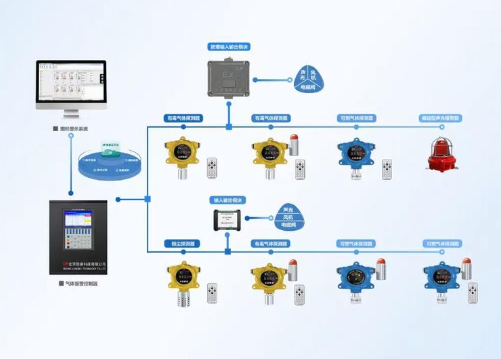
According to the volume of the archives storage room and the requirements for monitoring harmful gases, targeted gas monitoring sensors or multi-in-one gas monitoring sensors are configured to monitor the pollution of harmful gases in the storage room in real time, ensuring that the harmful gases in the storage room are within the required range. The collected data is sent to the regional controller for analysis and processing. When the gas pollution exceeds the standard, it supports the linkage of air purification equipment to purify the air in the storage room and immediately issues external alarms such as phone calls, APP notifications, WeChat messages, and SMS to alert the storage room managers to handle the situation.


