


Key Technologies and Strategies for Workshop Environment Monitoring and Control
In modern industrial production, the workshop environment has a direct impact on product quality, production efficiency, and employee health. Implementing efficient workshop environment monitoring and control has become a crucial link in enhancing overall manufacturing levels. By real-time monitoring of key parameters such as temperature, humidity, dust particle concentration, and harmful gas content, enterprises can promptly identify and adjust unfavorable factors, ensuring the stability and optimization of the production environment.
Sensors, as the "eyes" of the environmental monitoring system, are of critical importance in terms of accuracy and stability. Modern sensor technologies, such as temperature and humidity sensors, optical dust particle counters, and gas sensors, can achieve high-precision, real-time data collection, providing a solid foundation for subsequent data analysis and control strategies.
Based on the actual layout and production needs of the workshop, the location and number of monitoring points should be rationally planned to ensure the comprehensiveness and accuracy of the monitoring data. At the same time, the scalability and compatibility of the system should be considered to reserve space for future upgrades. Based on the results of data analysis, targeted intelligent control strategies should be formulated. For example, when the temperature or humidity exceeds the preset range, the system automatically starts the air conditioner or dehumidifier for adjustment; in the case of excessive harmful gases, an alarm is triggered and the exhaust system is activated.
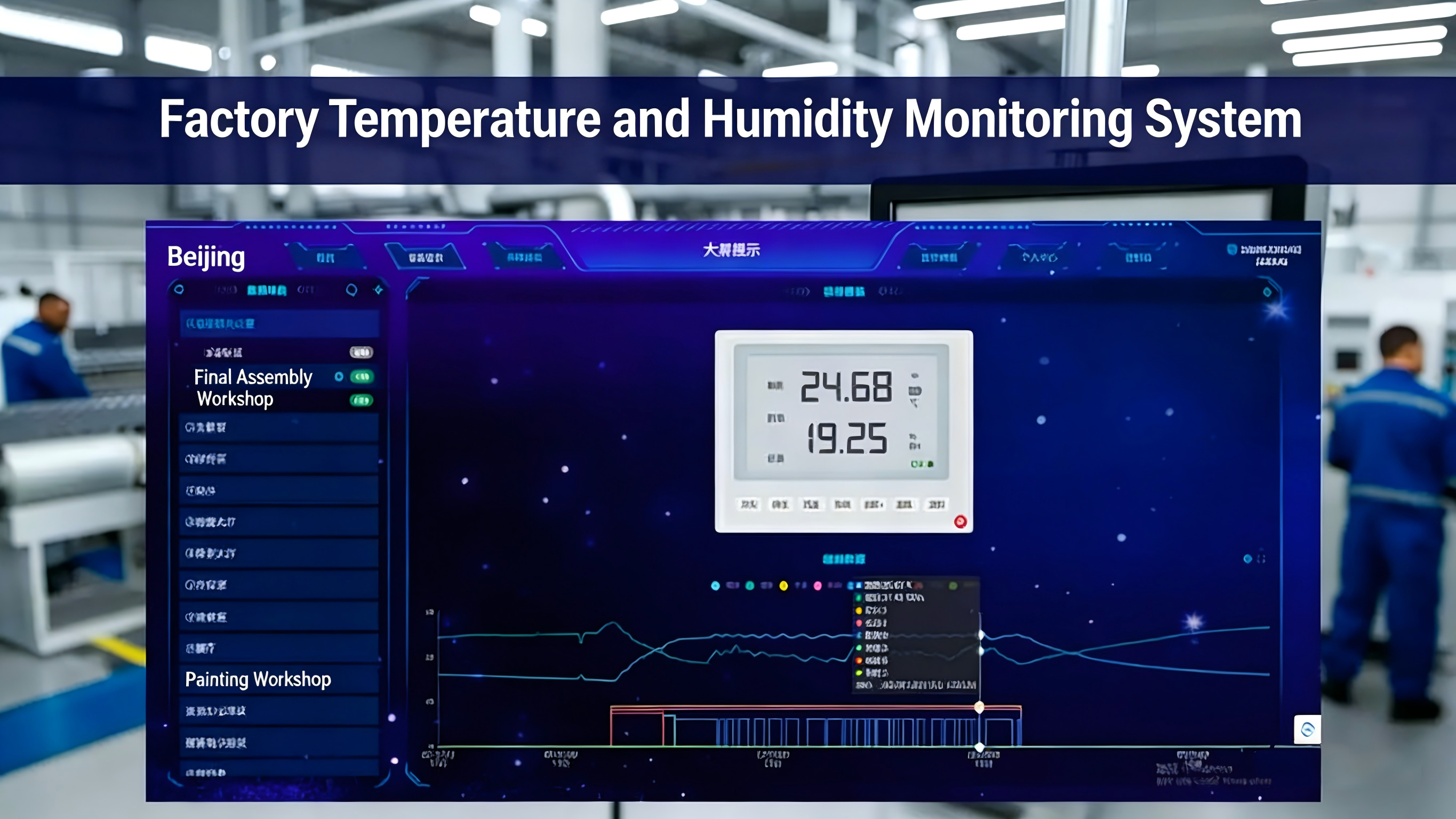
Workshop environment monitoring and control is a systematic project involving multiple advanced technologies and implementation strategies. Through scientific and reasonable planning and execution, it not only significantly improves product quality and production efficiency but also effectively guarantees the health and safety of employees, laying a solid foundation for the sustainable development of enterprises.Key Technologies and Strategies for Workshop Environment Monitoring and Control
In modern industrial production, the workshop environment has a direct impact on product quality, production efficiency, and employee health. Implementing efficient workshop environment monitoring and control has become a crucial link in enhancing overall manufacturing levels. By real-time monitoring of key parameters such as temperature, humidity, dust particle concentration, and harmful gas content, enterprises can promptly identify and adjust unfavorable factors, ensuring the stability and optimization of the production environment.


